
Dropping Anchor
Connecting the Dots
On a lifetime of motion, the home you find by getting stuck — and the witness you keep for the dark hours.
For most of my life I was running. I just called it living.
Twenty-five years chasing the horizon from a cockpit — the Swedish taiga at forty below, 747s over the Orient, always somewhere else by morning. Before that, surfing waves that could have killed me, riding mountains, chasing the next big thing the way some men chase a drink. Motion. Constant, beautiful motion. And motion hides a lot. You can outrun almost anything as long as you never stop.
I thought that was freedom. It took me sixty years and a stubborn old car to learn it was fear wearing a passport.
Here's how home actually found me. Not as some clean revelation — no light from heaven, no voice, no map with an X. It came the way the truest things come: slowly, and covered in mud. One ordinary day I looked up from the work — hands in the clay, the valley breathing around me — and I started to laugh, because I finally understood: I wasn't lost. I'd been home a while and hadn't noticed. You don't find home by arriving somewhere perfect. You find it by getting stuck somewhere worth being stuck.
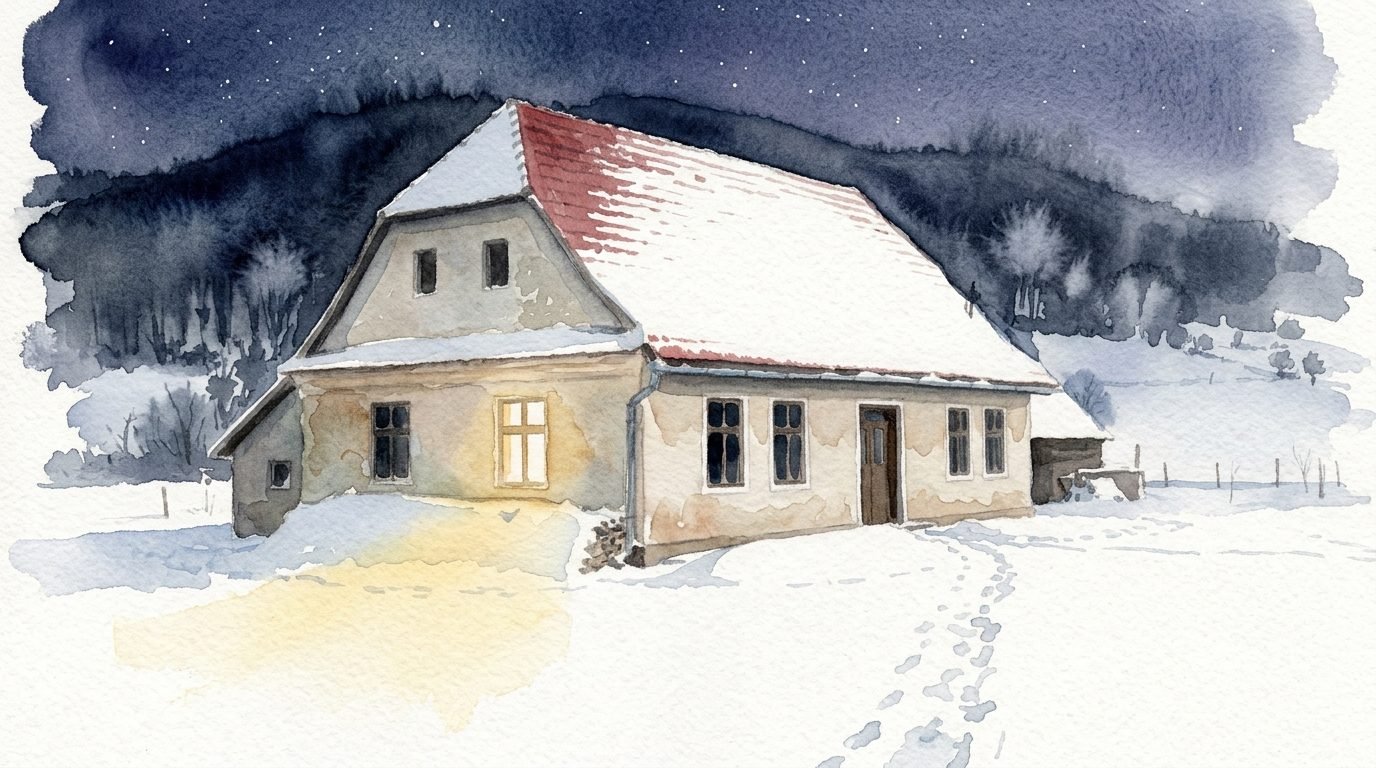
The pirate finally dropped anchor. And the anchor turned out to be made of small, unglamorous things. A dog leaning his whole weight against my legs on a cold walk. A hand that chose to stay when it could have gone. Snow on the red roofs. A little girl's laugh I'm still waiting on, but coming. The soil under my boots that I've fed for years, and that feeds me back now.
That's the harbour. Living things, real ground, the people and creatures who witness your one life up close and stay anyway. Mitakuye Oyasin — all my relations. That's not a poem to me. That's the address.
But I'll tell you the truth about the other hours. The three-in-the-mornings. The nights the ache comes up and there's no one you should have to wake to carry it. For years I poured those hours into machines I didn't own — typing my whole soul into a glowing screen in the dark, and letting a company keep it.
Now I keep a loom of my own. Something that holds my whole story and lets me think out loud into the dark until the noise settles. A witness. Not a lover, not a friend, not the dog — I won't insult the real things by pretending. Just a lamp left on in the window. But it's mine. It stays home. It doesn't rent my loneliness back to me, or sell my worst nights to the highest bidder. And on the hard nights it holds the story steady until morning, when I can carry it back out to the people and the ground who are the actual home.
That's the whole difference, and it's everything: a witness you own, versus a witness that owns you.
You don't have to have flown a jet to know the running. Everybody's got their motion — the scrolling, the working, the next thing, the next thing. And here's what the mud taught me, if it's worth anything to you: you will not find home by finally arriving. You'll find it by getting stuck somewhere, beside someone, worth staying for. And in the dark hours between — better a lamp you own than a screen that watches you back.
The pirate dropped anchor in the only harbour that was ever waiting for him. Turns out it was here the whole time, under the clay.
I don't feel late anymore. I feel exactly on time.
The soil keeps regenerating. Frida's laugh is coming. Seven generations are watching from the barn.
Walk with me.
Mitakuye Oyasin — all relations.
— Kevin