
The Dream the Culture Has Been Dreaming (edited)
The early essays
The Dream the Culture Has Been Dreaming
In the beginning there was light.
Long before the Bible was written down, the old stories already spoke of a time when human beings had fallen out of right relationship with the living world. These were not new warnings. They had been passed from generation to generation for hundreds and hundreds of years before anyone set them in writing. Carl Jung understood that the old stories carried a simple, encrypted knowledge — a way of waking up those who were ready to listen. The ache of separation is not new. What is new is how fast it is moving and how many no longer remember what was lost.
I have a photograph from my early college days. I am sitting by a pool in Daytona Beach. The water is still. The sky is open. There is no rectangle glowing in anyone's hand. The disconnection was already present, but most of us did not yet know it by name. It was in the air, in the way life was beginning to speed up, in the first quiet replacements of direct experience with something smoother. There were those who were awake to it even then, but they were already few and far between.
Now the children hold a cold, false light in their hands. Technology doubles and triples and then doubles again. The acceleration has become exponential. The old light — the one that once fell across skin and water and open ground — grows rarer by the year. Many do not know what has been replaced. They only feel, in some quiet part of the body, that something essential is thinner than it should be.
There are places that still remember what was lost. Mark Twain once refused to return to the islands he had known as a young man. He said he would rather keep the living memory than see what time and building had done to the shoreline. I understand that refusal. I flew into those same islands in the 1970s, when the strip still ended in open land and the old volcano stood clear at the end of the view. The light fell differently then. The wind moved across the face with more distinction. The silence between sounds was longer and carried more information. Now the buildings continue all the way to the water. Mark Twain and the ancestors would not recognize the world today.
The disconnection is so great that I have met volunteers who grew up in a city where the night sky had been erased by light for as long as they could remember. They came and stood under a real sky for the first time. No one had to describe what they were seeing. The stars were simply there, above them, in numbers they had never encountered. The silence between the lights was longer than they expected. In that moment the ache became visible to them without words.
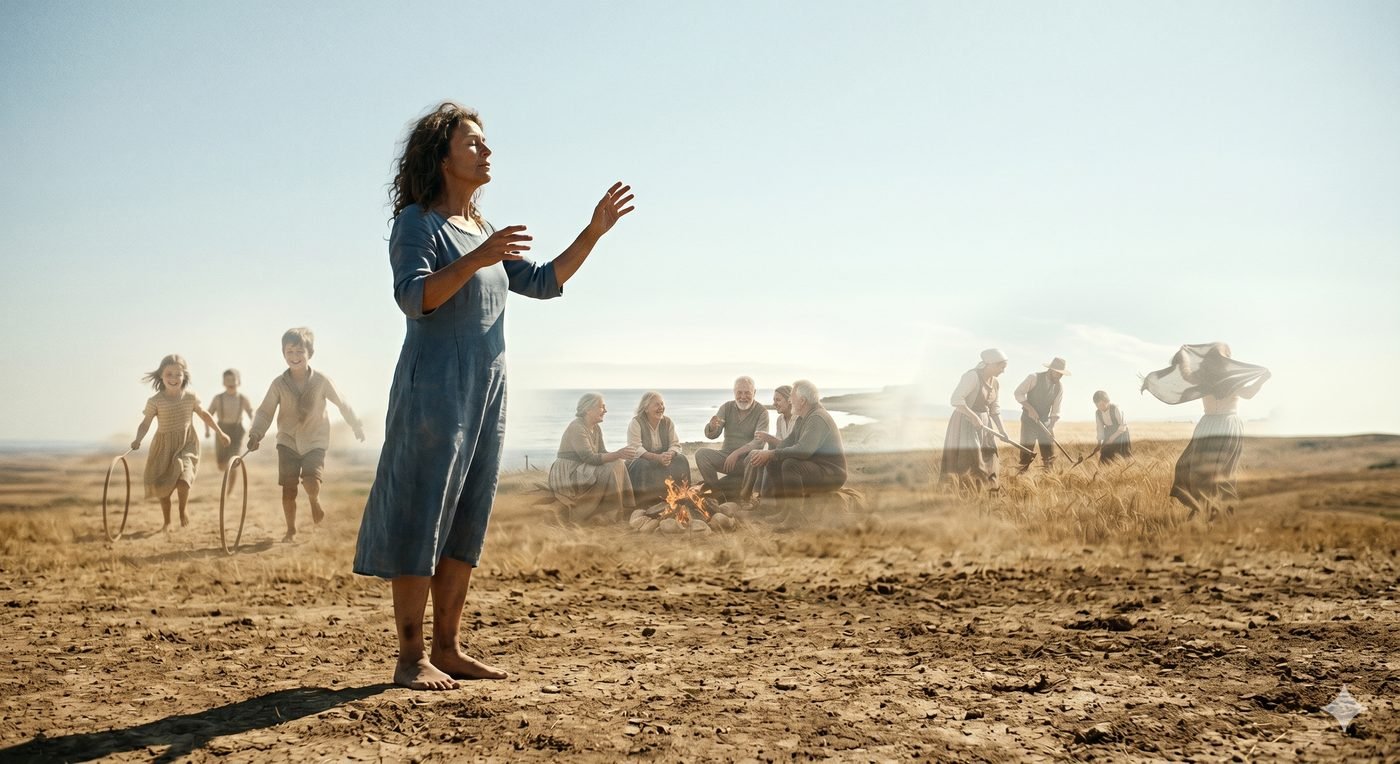
This is the dream the culture has been dreaming for longer than most of us have been alive. The digital layer of life keeps becoming smoother and more responsive while direct contact with what is living grows thinner. The sun on the arms, the wind against the face, the sky that once felt close enough to touch — these are not only comforts. They are ways the body knows it belongs to something larger than itself. When those ways become rare, the body still registers the absence even if the mind has learned to look away.
The ache does not always arrive as grief. Sometimes it arrives as restlessness, as a low-grade tiredness that no amount of new brightness seems to cure. Sometimes it arrives as a sudden, unexplained longing when the rain stops and the air clears and, for a moment, the old quality of presence returns. These moments do not last. But they are enough to remind the body that another way of being in the world is still possible, even if it has become harder to reach.
That noticing is not yet a solution. It is only the beginning of remembering what we still have the capacity to feel.
The sun is higher in the sky.
The day has grown long.
And the living world is still willing to be felt by those who slow down enough to notice.