
The First Light
After Șomartin — Exile in Sibiu
The air in many places still carries the scent of rain on old stone and new concrete. A high, thin melody moves through the culture. It belongs to those who have climbed highest on the current tower of wealth and invention. They are the ones singing this song. They point toward other planets and say the ground beneath our feet is finished, that survival will require leaving it. Some of them are already building private spaceships and private shelters meant only for a very small number of people. These are not ordinary ships. They are vessels designed to carry a tiny fraction away from a planet they believe has become too damaged to remain on. These are not ordinary shelters. They are bug-out places prepared in advance for when the surface here is no longer considered livable. The offer is presented as progress. It is also an exit, and it is not an exit that is available to most. It is an exit shaped for those who have the resources to take it. Nothing about leaving changes the one who leaves. A way of seeing that can look at a living world and call it finished does not become a different way of seeing on arrival. It is unpacked at the other end, intact.
Many people feel the ache underneath that offer. It is not always named. It arrives as a quiet pressure in the chest, a sense that something essential is being lost or covered over. Some feel it strongly — those who carry direct memory of a different kind of presence. Others feel only a vague unease they cannot quite place, having never known anything different: young people in cities where the night sky has been erased by light may not realize what has been taken from their field of vision until it is pointed out. Both are waking to the same recognition — the living world is being replaced by something smoother, and the body still registers the difference, even when the memory of what was lost is not there to name it.
The story moving through the culture right now dreams of a final arrangement between human beings and the machines we have made. In one version of that dream, the machines take over the difficult and the ordinary so that human life can become lighter and more entertained. In another version, human and machine finally merge into a single new form that no longer needs the old ground at all. Both versions contain a promise of relief. Both versions also contain a quiet agreement to step away from the work of staying in relationship with what is alive and unfinished.
There is another way of joining what we have built with what we have been given. It does not require departure. It begins with the simple decision to remain in contact. To stay in contact means letting the hands that shape new tools also remember the feeling of soil after rain. It means letting the thinking machines serve the slow work of care rather than replacing the need for care. It means allowing the body to keep feeling the difference between sun on skin and light from a screen, between wind that moves across a field and air that has been conditioned. This kind of joining does not reject what has been made. It asks what has been made to remain in service to what still needs tending across generations.
The old dream of a single figure who sees everything and leads everyone out has lost its usefulness. What remains useful is the recognition that many people are already awake to the same ache and the same possibility. Some will work through machines. Some will work through soil and water and growing things. Some will work through story and memory. The important matter is not who leads, but whether enough of us are willing to keep one hand on what is alive while the other hand continues to shape what comes next. That willingness does not require agreement on every detail. It requires only that we refuse to let the living world become optional.
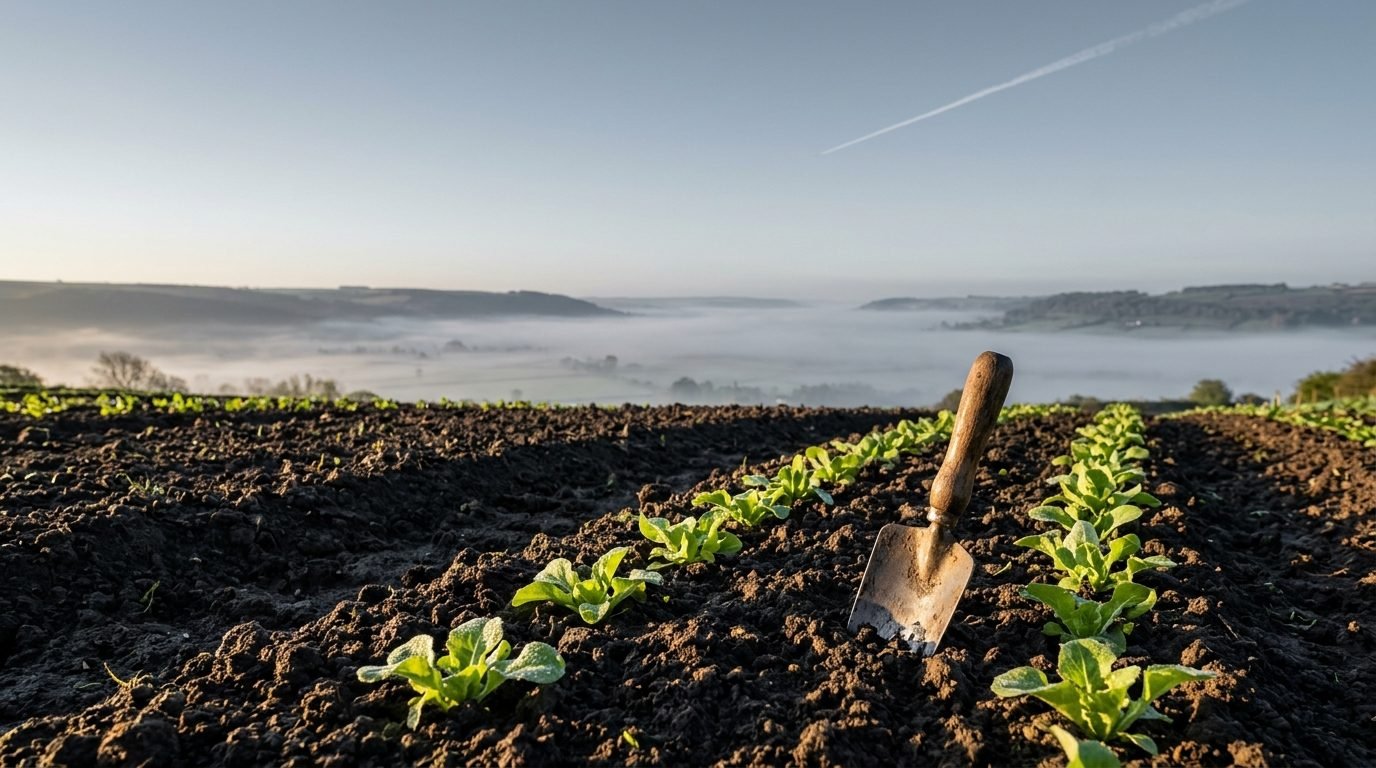
The light is low on the horizon.
The day is only beginning.
And the soil is still willing to receive whoever is ready to stay.