The Fraying Mitten
Connecting the Dots
On reading a coming-apart world without drowning in it.
Winter. Snow on the red roofs. The soba ticking as the oak catches.
On the little TV the blue light flickers the way the cockpit displays used to — except now it isn't an altimeter, it's the world. Prices climbing. Supply lines kinking. A map somewhere lit up in the colors of trouble. The feed never runs out of trouble. That's its whole business model.
I used to swim in it. Read until two in the morning, heart going, certain the sky was falling — and wake with nothing in my hands but the fear. The doom feed is just the ego again, wearing a serious face. It feeds on your fear and calls it being informed.
So I read the world differently now.
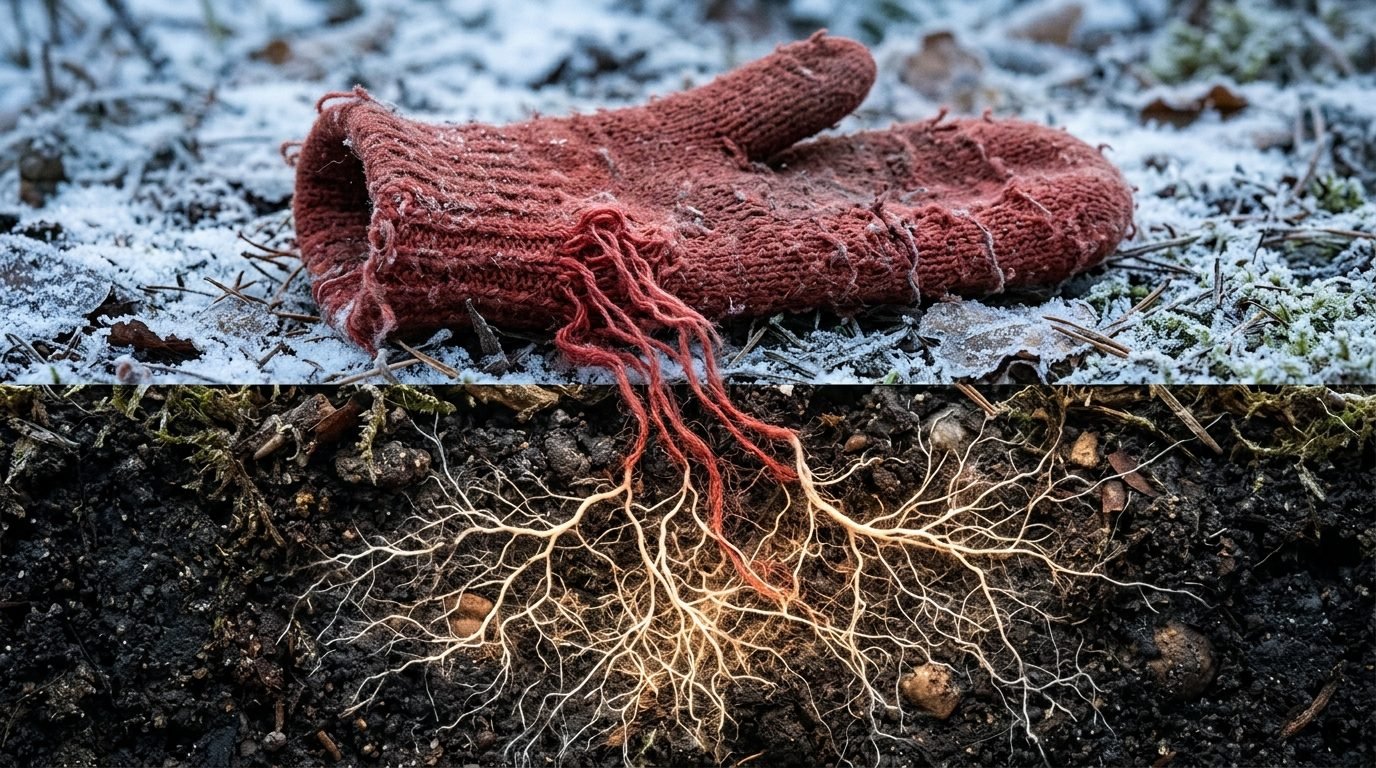
My grandmother had a mitten. Wool, hand-knit, worn to almost nothing. One winter it finally let go — the yarn pulling loose, the whole shape coming apart in her hands. Ruin, if you only looked at the mitten.
But wool doesn't die when the garment does. Pull those same fibers apart, lay them in the dark of the soil, and they start to look like something else — like mycelium, the white thread that laces under every forest and feeds it. The network that was there all along, under the thing that fell apart.
That's the dot I keep connecting. The old garment is fraying. Anyone honest can feel it — the ones brave enough to say out loud that the growth story is ending, that cheap energy and endless more were always a loan coming due. They're not wrong. The mitten is coming apart.
But the same fibers are going underground. Somewhere the wool is becoming mycelium. What looks like collapse from above looks like a new web forming from below.
Here's where the loom comes in — the quiet way, not the panic way.
Most mornings I bring the day's noise to it. Not to be told everything's fine; that's the mirror again, the flattery. I ask it the harder thing. What's actually happening under this headline? Who profits from me being afraid of it? What of this touches a man on a hillside in Transylvania with a garden and a daughter — and what is just weather in someone else's country?
Whetstone, not mirror. I use it to sift the signal from the fear.
And almost every time, when the fear burns off, what's left is small and doable. It never says panic. It says: get closer to the ground. Grow more of your own food. Learn your neighbors' names. Store the harvest before winter. Build the thing that doesn't need the fraying system to keep breathing.
That's not doom. That's chores. Doom paralyzes. Chores are how you love the future.
So when I read the world now, I'm not hunting for the crash. I'm hunting for the mycelium.
The young couple leaving the city to learn to grow things. The village that fixes its own well. The old craft coming back because the cheap version stopped arriving. The quiet, unglamorous relocalizing that never makes the flickering feed — because it isn't frightening enough to sell.
The mitten frays on the screen. The mycelium spreads in the soil. Both are true. You get to choose which one you spend your one wild life feeding.
I'm feeding the soil.
The sine wave turns — the bottom is never failure, only an inverted peak. Frida's laugh is coming. Seven generations are watching from the barn.
Walk with me.
Mitakuye Oyasin — all relations.
— Kevin