
Episode One: The Mitten Begins to Fray
The Muddy Way — The Lean Years
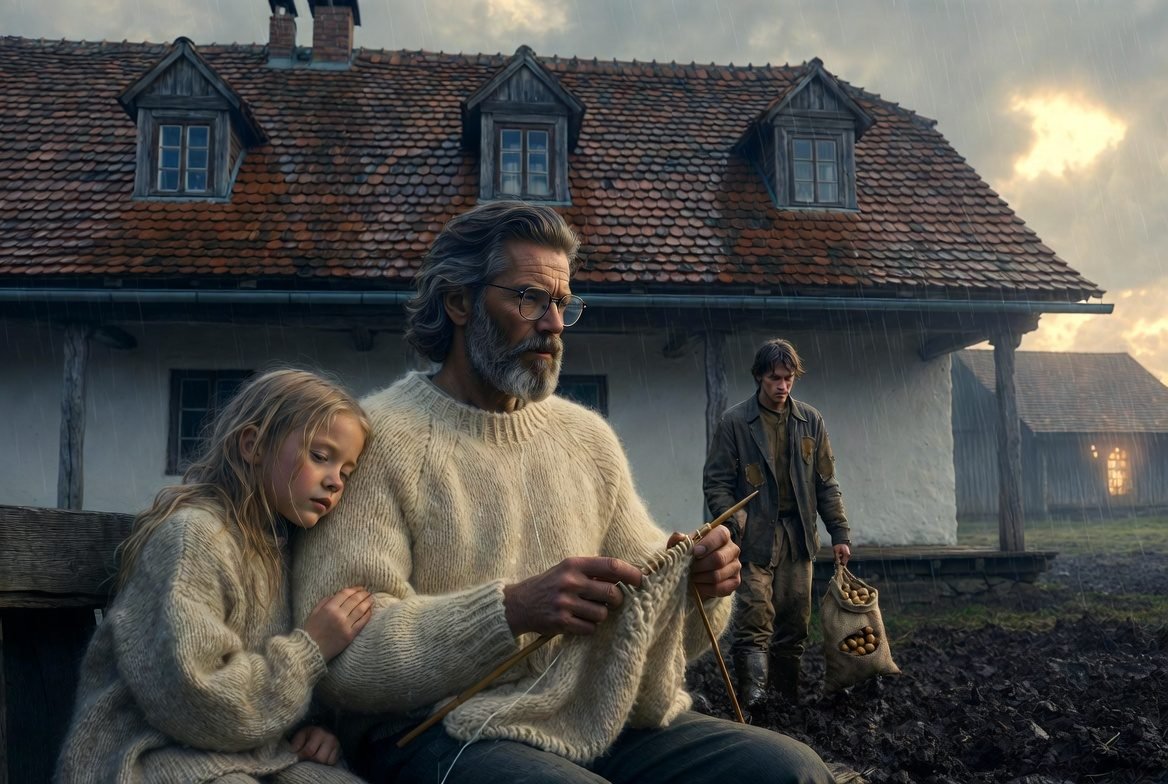
Six o’clock in Șomartin.
Still dark.
Cold March rain taps the red tile roof like impatient fingers. Water runs in silver threads off the eaves and disappears into the thick black mud of the yard.
Corey sits on the long wooden bench under the full-width porch. Exposed oak beams overhead, heavy with age and the faint smell of linseed oil. The living sweater — half-finished, cream-colored wool still carrying the lanolin scent of the sheep it came from — drapes across his lap. Wooden needles click softly, steady as a heartbeat.
He feels the weight of the wool in his hands, the slight tug when a stitch catches, the warmth building where the fabric rests against his thighs. The air is damp, heavy with the sharp green smell of wet pine from the hills and the deeper, earthy breath of turned soil.
Axel comes up the stone path from the barn, boots sucking softly in the mud. He carries a small burlap sack heavy with seed potatoes. The sack smells of dark cellar and faint diesel from the old Triumph carburetor they traded for it last week. His shoulders are broad under the patched wool jacket, rain glistening on the fabric like tiny beads of mercury.
He stops at the edge of the porch, stamps once, twice. Mud falls in thick clots.
“No trucks from Sibiu again,” he says, voice low, almost gentle. “The big diesel ones. Nothing on the road since Tuesday.”
Corey nods once. Needles keep clicking. The sound is small against the rain, but steady. A living rhythm.
Iris slips out the heavy wooden door behind him — Iris, seven years old, long blonde hair still tangled from sleep, wearing the too-big sweater Corey knitted her two winters back. She climbs onto the bench beside him, pressing her small warm body against his side. Her hair smells of woodsmoke and the faint sweetness of the wild mint tea they drank last night.
“Why does the sky smell different this spring, Papa?” she asks, voice soft as the rain.
Corey sets the needles down for a moment. He rests one callused hand on her head, feeling the fine strands, the warmth of her scalp, the tiny pulse beneath.
“Because the mitten is coming off, little one,” he says. His voice carries the quiet Swedish lilt, calm even when the words are heavy. “We’ve worn it so long the skin bonded to the fabric. Now the fabric is fraying. And everything we forgot how to feel is waking up again.”
He lifts his other hand, still smelling of lanolin and wet wool, and presses it gently to the cool stone floor of the porch.
“Feel that?”
Iris copies him. Small palm flat on stone.
“Cold,” she whispers. “And it… hums.”
“Yes. That is gravity talking to your bones. One of the fifty-four senses we were born with.”
Axel sits down on the other side of her, his big frame making the bench creak. He smells of honest sweat and the faint metallic tang of engine grease still on his hands.
“Remember last summer when you showed us the temperature gradient on the barn wall?” Axel says, smiling a little. “I could feel the cool stone at the bottom and the warm air rising. My skin actually prickled. Like my body remembered something it had forgotten for twenty-six years.”
Iris nods, eyes bright. “And the sense of place when we planted the garlic last fall. I could taste the clay on my fingers for days. It made me hungry in a different way. Not for food. For… being here.”
Corey’s needles start again. Click. Click.
“Anthony felt it strongest with the wild yeast,” he says quietly. “Last month when we brewed the rye wash together by firelight. He said the bubbles smelled like the old stories you told him about the Tunkashilas. Like the earth itself was breathing back.”
The rain eases a little. A single shaft of weak morning light breaks through the clouds and lands on the porch stones, warm gold against cool gray. Corey feels it on the side of his face — temperature gradient, another sense stretching after long sleep.
He thinks of the old question that used to live in his chest like a splinter: How can people be so mean to one another?
But this morning the question feels different. Not grief. Not even the quiet Swedish pissed-off that sits like cold lake water that never warms.
Just the sine wave.
The inverted peak.
The soil keeps regenerating.
Iris leans her head against his shoulder. Her breathing slows, syncing with the click of the needles. Axel watches the light move across the yard, where last year’s kale still stands dark and stubborn in the mud.
Corey sets the knitting aside.
“Come,” he says. “Let’s plant the first potatoes while the ground is soft. Feel the clay. Smell the worm castings. Taste the promise on your tongue.”
They walk together into the garden — three generations of the living sweater moving as one.
The mud is cold, heavy, clinging between every set of fingers. Iris giggles when it squelches up between her toes. Axel drops to his knees without hesitation, the dark earth staining his trousers. Corey kneels beside them, the clay cool and alive against his palms.
Each potato goes into the ground with a small prayer.
Iris whispers, “I can feel the roots already reaching.”
Axel presses the soil firm around another seed. “And I can smell the rain that’s still coming. Like the earth is saying thank you before we even finish.”
Corey smiles the small Swedish smile.
Row by row.
Stitch by stitch.
The living sweater grows longer, warmer, wide enough to hold a village when the long supply chains finally fall silent.
And in the quiet under the red tile roof, the 54 senses — long starved, long forgotten — begin to remember their own names.