
Episode Two: What the Radio Said
The Muddy Way — The Lean Years
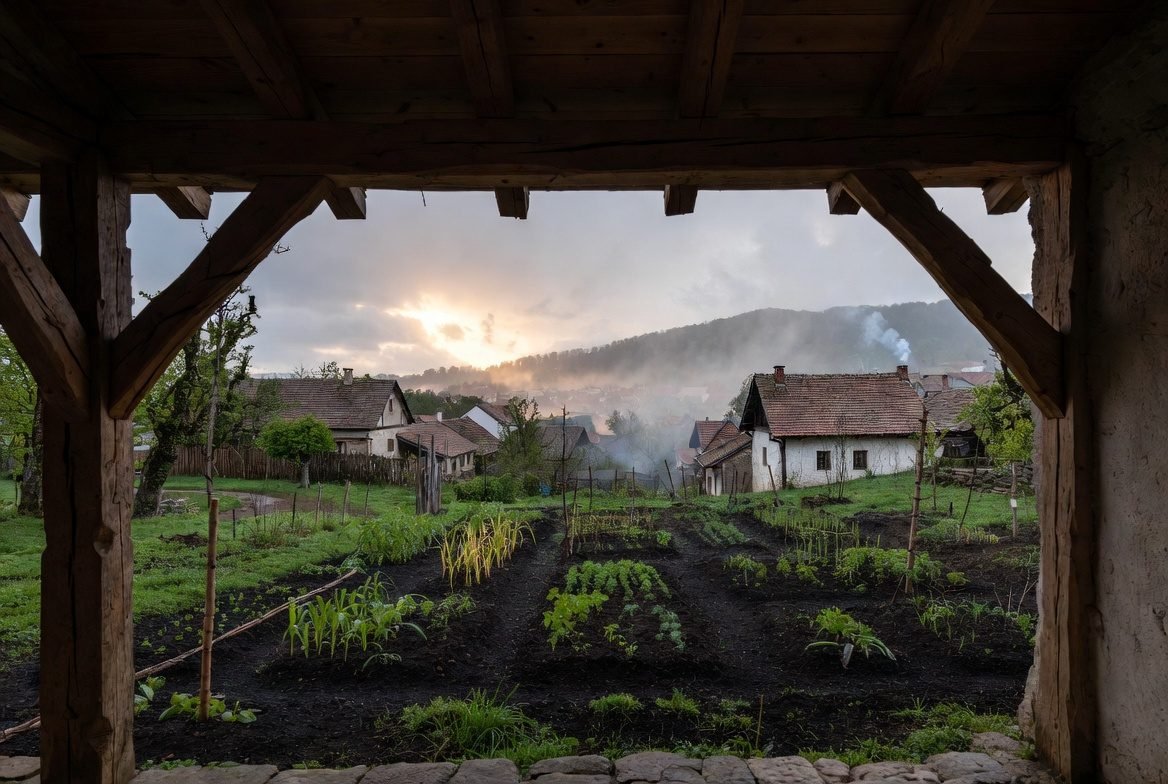
The small fire in the iron brazier popped softly, sending sparks dancing upward into the gray March morning. Rain still tapped the red tile roof, steady as knitting needles. Under the full-width porch the air smelled of wet pine, woodsmoke, and the faint sweet lanolin rising from the half-finished living sweater across Corey’s lap.
Iris leaned against his side, her small hands wrapped around a mug of hot wild-mint tea. The steam carried the sharp green breath of the herbs they had dried last autumn on the rafters. Axel sat on the other end of the bench, coffee dark and bitter in his mug, the ceramic warm against his palms. Anthony had just come out the heavy wooden door, still rubbing sleep from his eyes, his patched wool jacket thrown over his shoulders. He smelled of the barn hay and the faint metallic trace of the old tools he had been sharpening by lantern light the night before.
Corey’s needles clicked on, slow and even.
“Four years ago,” he said, voice low and steady, “I started saving every good seed. Not the pretty ones from the packet. The ones that fought through the clay and still gave something back. First tomatoes were small, tough, almost bitter. Potatoes barely pushed up. But I kept the strongest. Planted them again the next spring. And the next. No chemicals. No tilling that tears the soil apart. Just compost from the barn, worm tea we brew in the old barrels, and patience.”
He took a slow sip of coffee. The heat spread through his chest, meeting the quiet Swedish pissed-off that lived there like cold lake water that never warms.
“Now those seeds know this place. The corn we saved has learned to stand tall in the March winds. The wheat heads are heavier each year, the barley tougher against the late frost. Tomatoes ripen earlier, sweeter, right on the vine. Carrots push deeper into the black clay and come up crisp. Cucumbers grow thick and cool even when the rain stays cold. They are becoming Șomartin seeds. Acclimated. Stronger. Ready to share with every family in the village who asks.”
Iris’s eyes brightened. “I remember planting the first carrot seeds with you, Papa. My fingers were freezing but the soil felt… alive. Like it was listening.”
Anthony nodded, pulling his jacket closer against the damp. “Last summer when we saved the wheat, I could feel the difference in my hands. The kernels were fuller. The stalks didn’t break so easy. It’s like the garden is teaching us back.”
Axel stared into the fire. “And the clover on the pathways — thick as a carpet now. We walk there so the beds stay loose. No compaction. The worms breathe easier. Everything feeds everything else. No waste. No fighting.”
The old battery radio on the windowsill crackled again. The Sibiu station voice came thin through the static:
“…more reports of empty shelves in Bucharest and Cluj… diesel shortages spreading… long queues at fuel stations… power cuts lasting eight hours in some districts… international supply lines remain disrupted…”
A figure appeared at the edge of the porch — old Mr. Müller from two houses down, his wool cap pulled low, rain dripping from the brim. He carried a small bundle wrapped in oilcloth. His boots stopped at the clover-thick pathway, careful not to step on the garden beds.
“Corey,” he said, voice rough but warm. “Good morning to you all.”
Corey set the needles down. “Morning, Hans. Come sit by the fire. Tea?”
The old man stepped under the roof, stamping lightly on the stone. He smelled of wet wool and the faint tang of his own small fire. He lowered himself onto the bench with a grateful sigh.
“I heard the radio too,” Hans said quietly. “Chaos building in the cities. People fighting over the last bags of flour. My daughter called from Sibiu last night — said the trucks stopped again.” He looked at Corey, eyes steady. “It’s a good thing you started sharing this stuff with us years ago. Seed saving. The no-till. The worm tea. The clover pathways so we don’t kill the soil under our feet. We laughed a little at first — the American with the knitting needles talking about fifty-four senses. Now we’re more prepared. My wife and I planted the corn you gave us. The stalks are already stronger than anything we used to buy. The tomatoes you saved are ripening earlier. The carrots push deeper. It’s like the garden itself is saying thank you.”
Hans took another slow sip of coffee, steam curling around his wool cap. The fire crackled low between them.
“Back when the trucks still came every week,” he continued, “we all lived like separate fingers. Each house grabbing what it could. My wife and I hoarded sugar like it was gold. The game was simple — get yours before the next man. Left-brain thinking, my grandson calls it. Numbers and competition. Now the trucks don’t come and that old game is breaking apart. You hear it on the radio — people in the cities fighting over the last bag of flour. Panic. Empty shelves. Everyone for himself. The old way is dying hard.”
Corey’s needles clicked on, steady as a heartbeat. The living sweater grew longer across his lap, warm wool still carrying the faint lanolin scent of the sheep.
“Out here it’s different,” he said quietly. “The village is becoming one body. Your wheat is my bread. My roof is your shelter. The liver doesn’t fight the kidneys for water. They work together so the whole stays alive. That’s what the right side of us always knew — the part that feels the clay between the fingers, the warmth of the fire on the face, the low hum of gravity in the bones. The part that remembers we belong to each other.”
Iris pressed closer, her small hand still smelling of the morning’s seed potatoes. “Like when Anthony showed me how to brew the rye wash. I held the jar and felt the bubbles rising — alive. My hands knew what to do even before my head did.”
Anthony smiled from the bench, his broad shoulders relaxed against the oak beam. “And when we saved the barley seed together last fall, I could feel the difference in my palms. The kernels were heavier, fuller. The soil had taught them. Not the store-bought kind that needed chemicals to survive. These ones know Șomartin now.”
Axel nodded, staring into the flames. “The clover on the pathways is thicker every week. We walk there so the beds stay loose. No compaction. The worms breathe easier. Everything feeds everything else.”
Hans looked out across the yard where the green clover paths wound between the beds like living veins. The black Transylvanian clay beneath them was waking up — richer every season, listening, remembering.
“The mitten keeps fraying,” Corey said softly. “But we are learning to feel with bare hands again.”
The rain eased to a whisper.
One week later the first real frost touched the clover paths and the humus rose another tenth of a percent in the black clay. The living sweater kept growing, row by row, while the 54 senses kept waking up — one cold, sweet, smoky, living breath at a time.
Row by row.
Stitch by stitch.
The living sweater grows longer, warmer, wide enough to hold a village when the long supply chains finally fall silent.
And in the quiet under the red tile roof, the 54 senses — long starved, long forgotten — begin to remember their own names.