
Tinȟpi Wíŋyaŋ
The Muddy Way
Tales from Somartin’s Soil
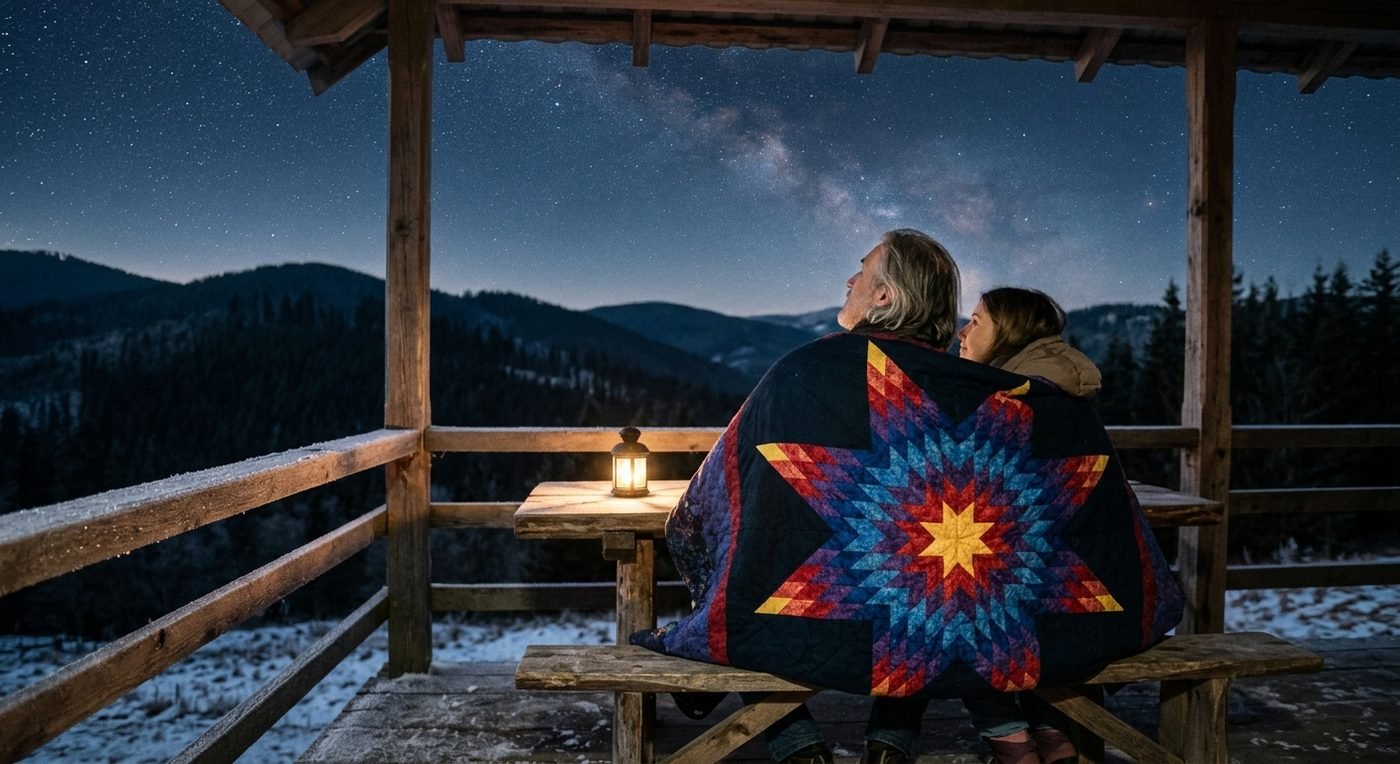
Under the January Sky
Few reasons to leave
A peace finally tasted
Sweet on the tongue like late-summer fruit
Under the January sky, vast as a buffalo robe thrown across the Carpathian ridge, the veranda becomes a quiet lodge. Frost glitters like scattered star medicine on the rails. Sage lifts his eyes to the black bowl above — Wakan Tanka’s breathing hole — where the ancestors hung their campfires, bright and steady, speaking still.
“Look up, kin,” he says, voice soft as winter hush. “The Lakota call them Wičháȟpi — the stars, our relations. Not distant lights, but grandfathers and grandmothers watching, guiding, remembering. The Big Dipper — our own Tinȟpi Wíŋyaŋ, the sacred woman — turns slow, pouring the dipper’s water onto the world below, renewing the rivers, calling the rains home. When she tips just right, the people know: time to plant, time to heal, time to listen.”
Fris — Iris — tilts her head back, small face bathed in star-silver, pup’s breath fogging at her feet. “Papa Sage… do the stars see the bees dying? Do they see the empty hives?”
He draws her close, quilt pulled around them both, bison and stars stitched into one skin. “They see, little one. And they mourn with us. But they also teach. The star knowledge is balance medicine: each light in its place, no one crowding, no one forgotten. Balance is the heartbeat of everything. Bert used to say it plain: ‘Always’ and ‘never’ are the enemies of balance. Say ‘always,’ and you’ve already lost the middle way; say ‘never,’ and you’ve closed the circle before it could breathe. Too much, too little — both kill. Too much water drowns the root; too little starves it. The same with us. Too much take, and the rivers run dry. Too much smoke, and the lungs forget how to sing. Mankind has walked far out of balance.”
Antonio, mug cradled, glances upward. “And Fair Share? The stars don’t hoard their shine.”
Sage nods, breath clouding in the frost. “Exactly. No star burns alone. They share the dark so we can see. We do the same — no taking the whole river, no draining the well dry. One bloom planted, one worm carried to safety, one story told around the fire — small acts that mirror the great pattern above. Fair Share is balance in motion: enough for today, enough for tomorrow, enough for the ones who come after. No extremes. Just the middle path, steady as Tinȟpi Wíŋyaŋ turning through the seasons.”
Elena murmurs, “So the stars are the first teachers of community?”
“Always were,” Sage answers, letting the word hang a moment before he smiles. “But even ‘always’ needs its balance. When we lost the way — too much smoke, too much drink, too much take — we forgot the circle. But the Wičháȟpi never forgot. They turn every night, patient, showing us how to turn back to balance.”
Iris reaches up, as if she could touch the Dipper herself. “Will you show me how to plant by the stars, Papa Sage?”
He smiles, rare and full as moonrise. “Every season, little star. We’ll watch the Tinȟpi Wíŋyaŋ together, plant when she pours, rest when she holds still. One seed. One bloom. One circle closed — neither too soon nor too late.”
The crew nods, voices soft, a circle of light against the vast night. Maria’s voice rises, gentle, carrying the old ache into Lakota cadence:
“I have found me a home… where the star-water pours, where the balance still dreams.”
Wistful as frost on the quilt, yet warm with promise — the ancestors leaning close, seven generations listening from the campfires overhead, reminding us: the way back is not straight, but it is always circular.
Mitakuye Oyasin.
Now our minds are one.